
Wisdom Teeth Removal in Union
What Are Wisdom Teeth?
Wisdom teeth, also called third molars, are the last teeth to develop. They are located at the very back of the mouth behind the second molars and typically develop between the teenage years and early twenties. Because many people do not have enough room in their jaws for these teeth to erupt properly, wisdom teeth can become impacted or cause problems with the surrounding teeth and gums.
Our oral and maxillofacial surgeons can evaluate the position and development of your wisdom teeth and determine whether removal is recommended. Call Union Oral and Maxillofacial Surgery Phone Number (908) 687-1055 to schedule a wisdom teeth consultation.
Why Do Wisdom Teeth Become Impacted?
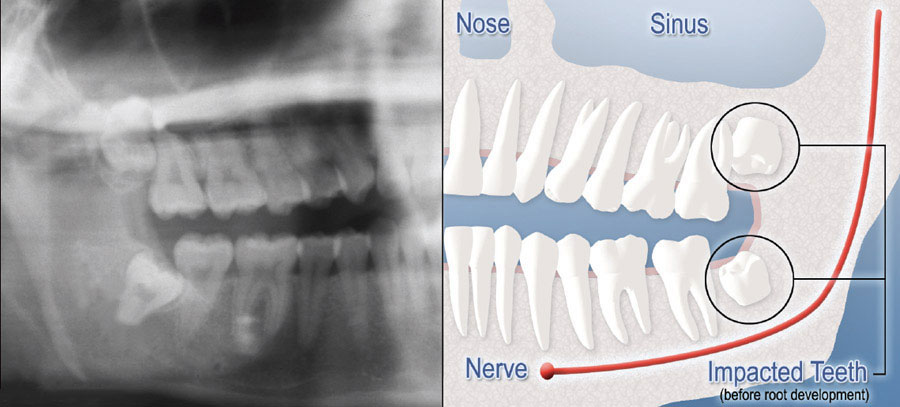
Although most people develop 32 permanent teeth, the jaws often do not have enough room to accommodate all four wisdom teeth. When there is not enough space for a wisdom tooth to erupt into a healthy, functional position, it is considered an impacted wisdom tooth.
Impacted wisdom teeth may remain partially or completely beneath the gum tissue or jawbone. An examination and panoramic x-ray (panorex) allow our surgeons to evaluate the position of your wisdom teeth, determine whether they are likely to erupt properly, and assess the complexity of removal.
Types of Wisdom Tooth Impactions
Wisdom teeth can become impacted in several different ways. The type of impaction and position of the tooth help determine the recommended treatment.
- Soft Tissue Impaction: The wisdom tooth has erupted partially or is positioned beneath the gum tissue, making it difficult to keep the area clean.
- Partial Bony Impaction: The tooth has partially erupted, but part of the crown remains covered by gum tissue and/or bone. Because the tooth cannot function normally and may be difficult to clean, it can contribute to infection and other dental problems.
- Complete Bony Impaction: The wisdom tooth is completely embedded in the jawbone and has no room to erupt. Its position, the surrounding bone, or nearby facial structures can make removal more complex.
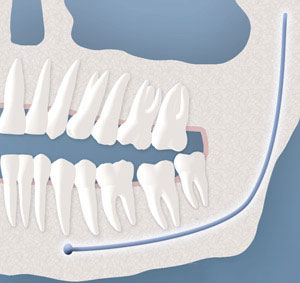 Soft Tissue
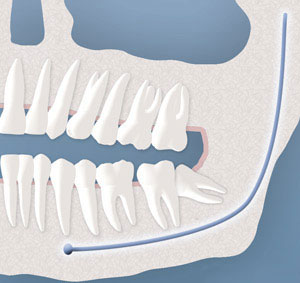 Partial Bony
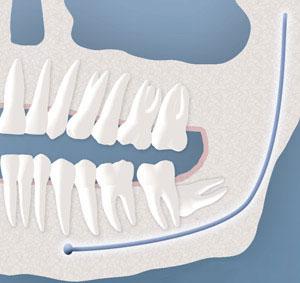 Complete Bony
Why Should Wisdom Teeth Be Removed?
If there is not enough room for your wisdom teeth to fully erupt, they can create problems for your oral health. During your consultation, Dr. Corry and Dr. Gordon will evaluate your wisdom teeth and discuss whether removal is appropriate.
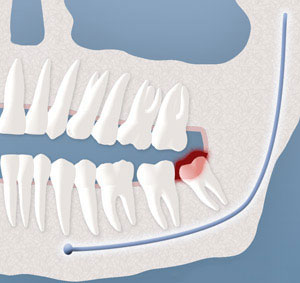
Infection
Partially erupted wisdom teeth can trap food and bacteria beneath the gum tissue, increasing the risk of pericoronitis. This localized infection can cause pain, swelling, bad breath, and difficulty chewing or swallowing.
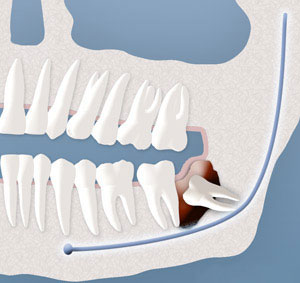
Cyst Formation
Cysts can occasionally develop around impacted wisdom teeth. These fluid-filled structures can expand within the jawbone and damage surrounding bone or teeth. Although uncommon, other growths can also be associated with impacted wisdom teeth.
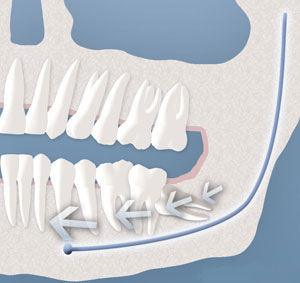
Possible Crowding
Impacted wisdom teeth may contribute to crowding or shifting of nearby teeth. While several factors can cause teeth to become crowded over time, retained wisdom teeth may contribute to changes in some patients.
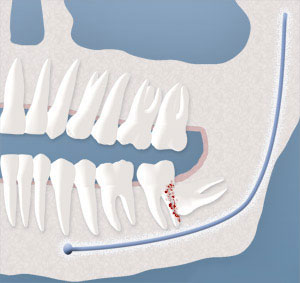
Damage to Adjacent Teeth
A wisdom tooth that is difficult to clean can affect the second molar directly in front of it. This may increase the risk of tooth decay, gum disease, and bone loss around the neighboring tooth.
When Should Wisdom Teeth Be Removed?
Patients are often evaluated for wisdom teeth removal during their teenage years, when the teeth are still developing. Removing impacted wisdom teeth before the roots are fully developed may make treatment and recovery easier for some patients.
However, there is no single age that is right for everyone. Some wisdom teeth can be monitored if they are healthy, functional, and unlikely to cause problems. Our surgeons will evaluate your individual anatomy, tooth development, and oral health before recommending treatment.
As wisdom teeth develop, their roots become longer and the surrounding jawbone becomes denser. For some older patients, removal can involve a more involved procedure and recovery. If you have retained wisdom teeth, an evaluation can help determine whether removal or continued monitoring is appropriate.
Wisdom Teeth Evaluation and Treatment
During your consultation, our surgeons will perform an oral examination and review x-rays to evaluate the position of your wisdom teeth. This allows them to identify current problems and assess the potential for future complications.
Studies have shown that early evaluation can help identify potential problems before they become more difficult to treat. Patients are commonly evaluated during their mid-teenage years by a dentist, orthodontist, or oral and maxillofacial surgeon.
What Happens During Wisdom Teeth Removal?
Wisdom teeth removal is an outpatient procedure, and appropriate anesthesia is provided to maximize your comfort. During your consultation, our team will discuss your anesthesia options and help determine which approach is best for your procedure.
On the day of surgery, medications may be provided to help manage discomfort and swelling. The procedure itself generally takes about 30 to 60 minutes, although you should expect to be in the office for approximately 90 minutes. The exact length of treatment depends on the number and position of the wisdom teeth being removed.
If sedation is used, an IV may be placed to administer medication. Local anesthesia is also used to keep the surgical area numb and comfortable. Because sedation can make you drowsy, you will need a responsible adult to accompany you home and remain with you for the rest of the day.

The Day of Treatment
Be sure to have an adult with you at the time of removal. Make plans to have a parent or responsible adult stay with you for the rest of the day following wisdom tooth removal.
Preparing for Surgery
Follow all pre-operative instructions provided by our office. If you are receiving sedation or anesthesia, you will generally need to avoid eating or drinking for the period specified by your surgical team. Having food or liquid in your stomach can increase the risk of complications during anesthesia. Your procedure may need to be rescheduled if you do not follow your fasting instructions.
If medications are prescribed before surgery, you may be able to have them filled in advance for your convenience. Our team will provide specific instructions based on your procedure and medical history.
What Is Recovery Like After Wisdom Teeth Removal?
Recovery varies depending on the number of teeth removed and the complexity of the procedure. If stitches are needed, they are often dissolvable and may not require removal. Temporary swelling, soreness, and a sensation of tightness around the gums are common during the initial healing period.
After surgery, follow the individualized instructions provided by our office regarding medications, diet, activity, oral hygiene, and follow-up care.
For detailed post-operative care instructions, please review our Wisdom Tooth Removal Surgical Instructions.
After your procedure, start with appropriate soft or liquid foods and gradually return to your normal diet as recommended. Take medications exactly as directed, and contact our office if you have concerns about your recovery or experience symptoms that seem unusual or worsen instead of improving.

After Your Procedure
Follow your post-operative instructions carefully and have a responsible adult available to assist you during the initial recovery period.
What Does Wisdom Tooth Removal Cost?
The cost of wisdom teeth removal depends on several factors, including the number of teeth being removed, the position and complexity of the teeth, and the type of anesthesia required. During your consultation, our surgeons will review your x-rays and examination findings before providing an estimate for treatment.
Insurance coverage varies by plan. Our office staff can help you understand your benefits and work to maximize available insurance coverage for your treatment.
Frequently Asked Questions About Wisdom Teeth Removal
Do all wisdom teeth need to be removed?
No. Some wisdom teeth may remain healthy and functional without causing problems. Your oral surgeon will evaluate their position, development, and potential risks before recommending removal or monitoring.
Is wisdom teeth removal painful?
Anesthesia and sedation options are used to keep you comfortable during the procedure. Some soreness and swelling are expected during recovery, but your surgical team will provide instructions for managing discomfort.
How long does wisdom teeth removal take?
The procedure commonly takes about 30 to 60 minutes, although the total appointment may be approximately 90 minutes depending on your individual treatment.
Do I need someone to drive me home?
Yes. If you receive sedation or anesthesia, you will need a responsible adult to drive you home and remain with you during the initial recovery period.
When can I return to normal activities?
Recovery varies from patient to patient. Your surgeon will provide personalized instructions regarding exercise, school, work, diet, and other activities based on the complexity of your procedure and your healing progress.
What should I do if I have questions after surgery?
We encourage you to contact our office if you have questions or concerns during your recovery. Call Union Oral and Maxillofacial Surgery Phone Number (908) 687-1055 to speak with a member of our patient care team.
To learn more about wisdom teeth removal and determine whether treatment is right for you, call our office at Union Oral and Maxillofacial Surgery Phone Number (908) 687-1055 to schedule a consultation.